

Why Base and BNB Chain Transfers Cost a Fraction of a Cent While Ethereum Gas Spikes
Data as of 15 June 2026. Figures are the market snapshot at publication; see the Ethereum price page for live numbers.
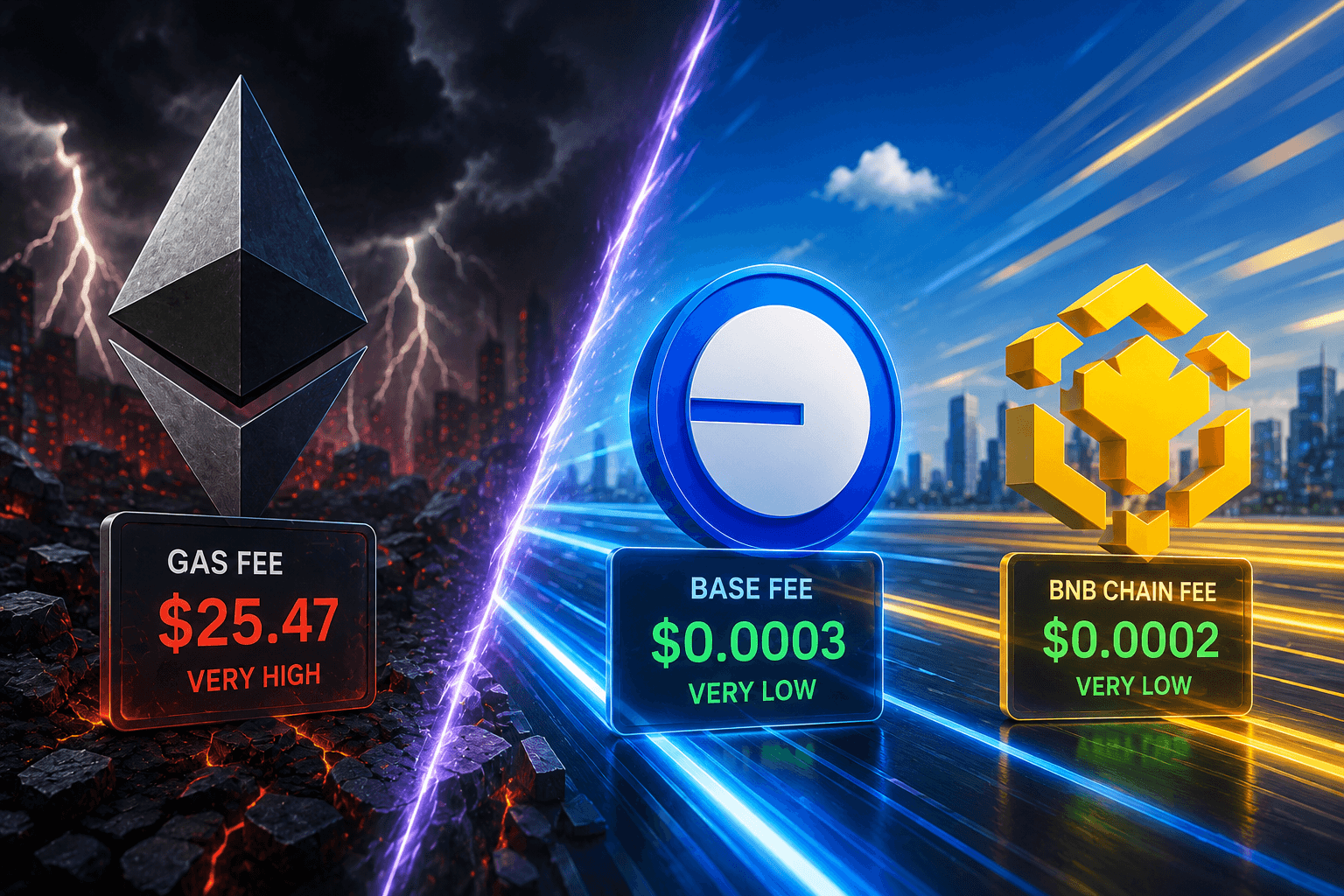
Anyone who watches transaction fees across the major networks has probably noticed something curious. While Ethereum gas spikes still make headlines during busy stretches, Base and BNB Chain quietly settle transfers for a fraction of a cent most of the time. Coinlib users tracking gas trackers, network throughput, and the steady climb of layer-2 activity have seen the pattern firsthand: cheaper rails are pulling everyday usage toward them. Those near-free transfers now power everything from DeFi swaps and stablecoin payments to high-frequency micro-deposits, and that growing volume is exactly what keeps these chains climbing the market-cap rankings and trending-coin lists.
That shift has changed how holders evaluate where their tokens actually get used. When transfer costs drop to pennies, the conversation moves to which sites accept those tokens and whether the experience holds up. That's the territory covered by 2026 review guides ranking the best bitcoin casino sites, which compare operators on welcome bonuses, game library size, withdrawal speed, and provably fair mechanics. These guides tend to name a top overall pick — Lucky Rollers leads several rankings — and they weigh security, variety, and player experience side by side, with extra attention paid to no-KYC and offshore operators that lean heavily on crypto deposits. For a Base or BNB Chain holder, that kind of head-to-head comparison answers the practical question: which destinations actually support the low-fee tokens they already hold?
The Fee Math That Makes Base and BNB Chain Attractive
The appeal comes down to simple arithmetic. Depositing $20 worth of ETH on the Ethereum mainnet during a congested window can eat several dollars in gas, which stings when the deposit itself is modest. Move that same transfer to Base, an Ethereum layer-2 built by Coinbase, and the fee often lands well under a cent. BNB Chain tells a similar story, with block times around three seconds and transaction costs that rarely register on a portfolio tracker.
For someone making frequent small deposits rather than one large transfer, those savings compound fast. Ten deposits over a weekend on a low-fee network might cost less in total fees than a single mainnet transaction. That's the difference between fees being an afterthought and fees being the reason a player picks one token over another. It's also why trending-coin lists and top-gainer pages increasingly feature tokens native to these networks — usage drives attention, and attention shows up in the charts. Foundational material on privacy on the blockchain reminds users that public ledgers are pseudonymous, not anonymous: every Base and BNB Chain transaction is permanently visible, no matter how small the deposit.
Speed and Settlement, Not Just Cost
Low fees grab the spotlight, but settlement time matters just as much. A deposit that confirms in seconds means a player can move from wallet to game without the awkward waiting that older networks impose. BNB Chain's rapid block production and Base's optimistic rollup design both prioritize quick confirmations, which is why they keep surfacing in conversations about responsive crypto experiences.
This is the same reason these networks have become magnets for DeFi activity, stablecoin transfers, and bridging tools like Stargate Finance. The infrastructure built for swapping USDT or moving liquidity efficiently happens to be the exact infrastructure that makes a deposit feel instant. Players benefit from engineering choices that were never designed for entertainment in the first place. The underlying tech for moving value cheaply and quickly across the next-generation monetary system is the same tech reshaping how casual transactions of every kind get done.
Stablecoins on Low-Fee Rails
Not every deposit happens in a volatile token. A large share of crypto entertainment activity runs on stablecoins, and USDT and USDC both circulate widely on BNB Chain and Base. For a player who wants to sidestep price swings between depositing and withdrawing, a dollar-pegged token on a cheap network is close to ideal: the value stays steady, and the transfer barely costs anything.
Coinlib's market-cap rankings make the scale obvious — stablecoins consistently sit among the most-traded assets on the board, and a growing chunk of that volume moves across exactly these low-fee chains. When a player funds an account with USDC on Base, they're tapping the same liquidity rails that traders use for arbitrage and that DeFi users rely on for lending. The overlap between serious finance and casual play keeps getting tighter.
Privacy, Verification, and the No-KYC Question
Part of what draws crypto-native users to certain operators is the lighter verification many of them require. No-KYC and offshore destinations often lean entirely on wallet-based deposits, which means a transfer from a Base or BNB Chain address can fund an account without the paperwork a traditional cashier demands. That convenience is genuine, but it sits inside an active research debate about how anonymity and accountability coexist on public networks.
Academic work like enabling anonymous yet compliant exchanges explores how fiat-to-crypto flows might preserve privacy while still meeting oversight standards — a tension that defines this whole corner of the market. Understanding that distinction between privacy and pseudonymity helps players make informed choices about what their on-chain footprint actually reveals, since public ledgers keep a permanent record of every move.
What It Means for Token Holders Watching the Charts
For the Coinlib reader who tracks Base and BNB Chain activity day to day, the takeaway is straightforward. The networks winning on fees and speed are the same ones quietly absorbing real-world transaction volume, and entertainment deposits are one slice of that growth. Watching where cheap, fast transfers flow offers a useful read on which chains are gaining everyday traction.
Low fees turned a niche behavior into a mainstream habit. As more activity migrates to networks built for speed and affordability, the line between tracking a token and using it keeps blurring — and the deposit screen is one of the clearest places to watch that shift unfold.