

Privacy Coins Gaining Traction as Crypto Traders Prioritize Anonymity
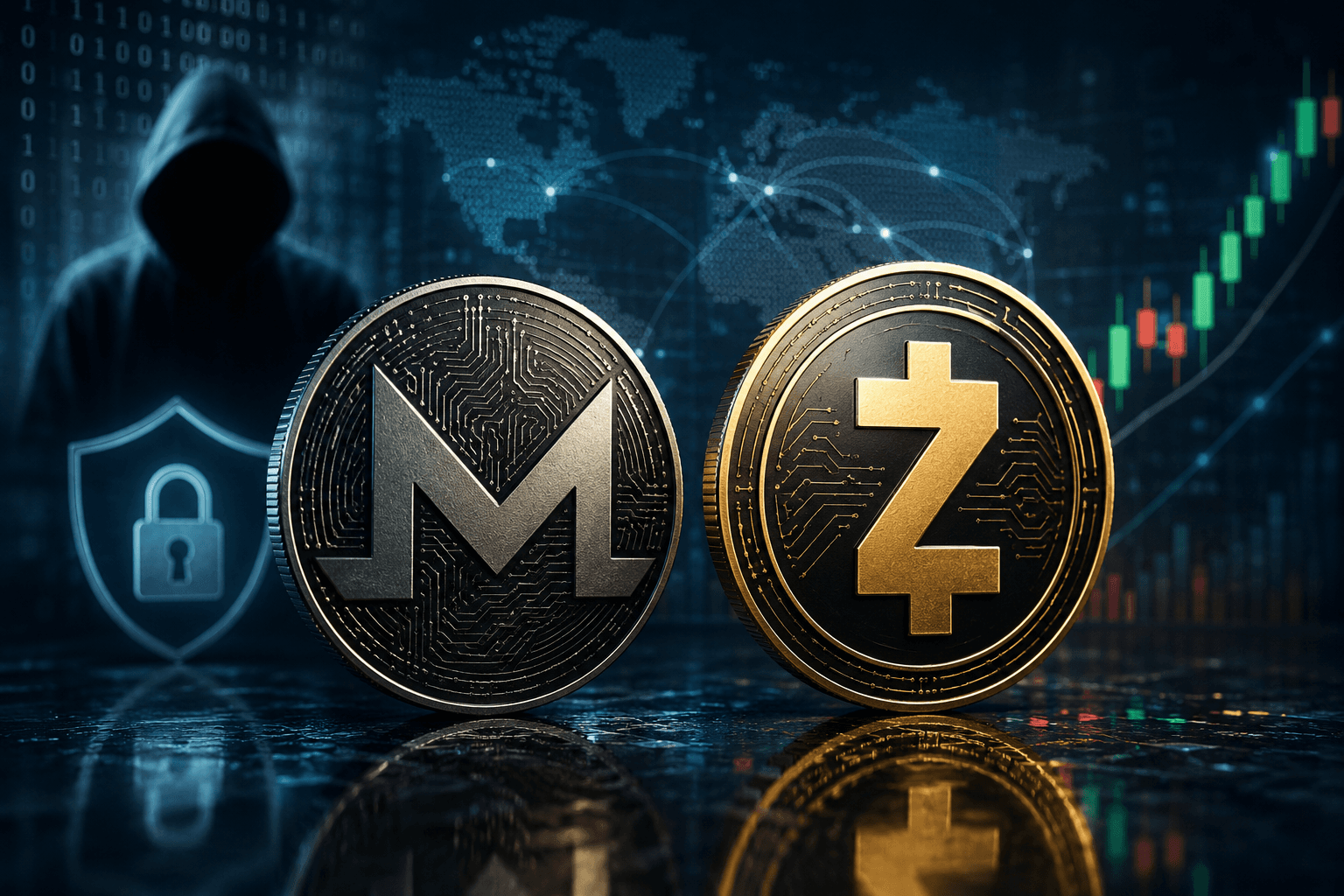
Something has shifted in the crypto market over the past 18 months. Privacy coins — long dismissed as niche assets associated with regulatory headaches — are drawing serious capital again. Monero (XMR) and Zcash (ZEC) have both posted notable gains, and analysts are paying closer attention to what, exactly, is pulling traders back into this corner of the market.
The short answer is surveillance fatigue. Traders increasingly resent the transparency of public blockchains, where every transaction is permanently visible to regulators, competitors, and data brokers. That discomfort is translating into real demand for assets that offer genuine financial privacy, not just pseudonymity.
Why Privacy Coins Are Surging Again
A confluence of forces is driving the renewed interest. Regulatory pressure on centralized exchanges has made on-chain privacy more attractive, not less, as traders look for tools that don't depend on custodial gatekeepers. At the same time, growing awareness of on-chain analytics tools has made many traders conscious of just how exposed their transaction histories really are.
Privacy-focused digital assets are now being used across a widening range of contexts. From cross-border transfers to decentralized finance and even anonymous spending at online casinos, where platforms offering crypto-native experiences are expanding rapidly for faster transactions and lower login requirements (source: https://cryptonews.com/cryptocurrency/best-anonymous-casinos/). This breadth of real-world utility is part of what separates the current cycle from earlier waves of interest in privacy coins, which were often driven almost entirely by speculative momentum.
Real-World Use Cases Driving Adoption
The practical applications for privacy coins have diversified considerably. Monero continues to dominate in peer-to-peer and high-anonymity transaction contexts, and according to TRM Labs' 2025 network study, nearly half of newly launched darknet markets now support XMR exclusively — a sign that operators and users increasingly treat Monero as the default private settlement layer. Transaction activity also remained above pre-2022 levels and has grown materially since 2020, underscoring persistent demand across market cycles.
Beyond those high-risk niches, privacy coins are being used more broadly for portfolio management purposes. Traders use XMR/BTC swaps to obscure portfolio movements, add layers of anonymity to their flows, and hedge against surveillance-heavy on-chain environments. A 2026 analysis found that global privacy-coin transaction volume surged past $250 billion in 2025 — a 17% increase year-over-year — suggesting the use cases are both widening and deepening.
Monero vs. Zcash: Which Leads in 2025
Monero maintained its position as the dominant privacy coin through last year by a significant margin. According to research from DL News, XMR hit an all-time high of roughly $596 in January 2026, up approximately 10% from its previous peak near $542, reflecting strong inflows into privacy-oriented assets. That milestone reinforced Monero's reputation as the go-to asset for traders who want hard, default-on privacy rather than an optional feature.
Zcash occupies a different position. Its privacy is opt-in through shielded transactions, which has made it more palatable to institutional actors but has also limited its appeal among privacy purists. That said, Zcash closed out a major overhang in early 2026 when the U.S. Securities and Exchange Commission concluded a multi-year investigation without recommending enforcement action — a development that sent ZEC sharply higher and reframed the asset as one capable of achieving regulatory détente rather than outright conflict.
Regulatory Pressure Could Define Their Future
The regulatory environment remains the most consequential variable for privacy coins going forward. Europe's MiCA framework has already imposed restrictions on custodial privacy-coin services, and several major centralized exchanges have delisted XMR in recent years to stay compliant. These delistings reduce liquidity access for retail traders and are a persistent downside risk for the sector. Yet the Zcash Foundation's SEC notice demonstrates that regulatory conflict is not inevitable — a privacy project can engage constructively and achieve a workable outcome.
Monero's trajectory will depend heavily on whether regulators move toward accommodation or escalation. Analysts project a 2026 trading range roughly between $280 and $420, with a bull-run scenario testing the $500–$600 range. For Zcash, cleared regulatory risk combined with a strong treasury position and ongoing protocol upgrades positions it as the more institutionally legible option. The coming 12 to 18 months will likely determine whether privacy coins carve out a durable mainstream niche or remain valued primarily at the edges of the crypto ecosystem.