

How Is The Crypto Space Predicted To Be Affected by AI's Proliferation?
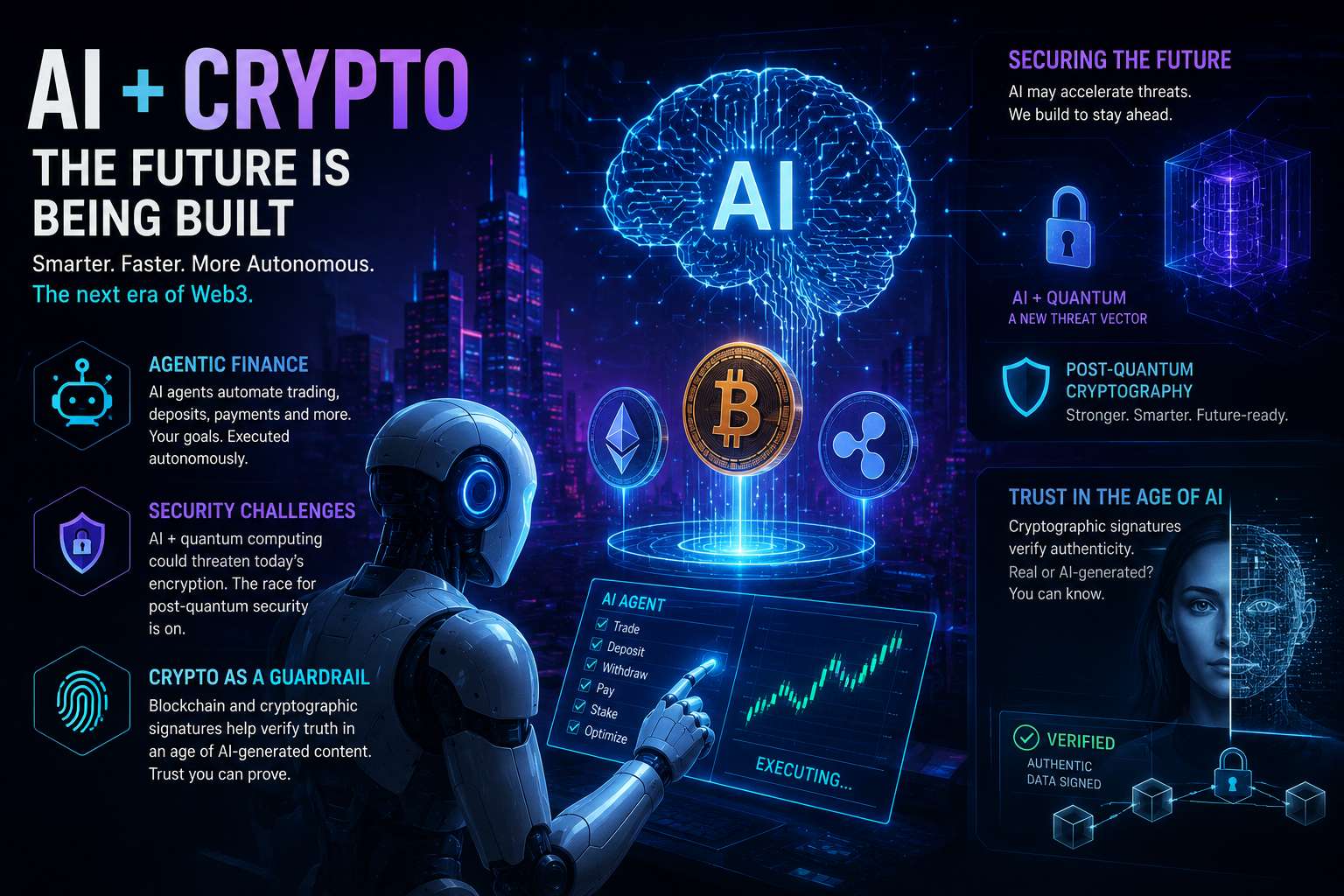
AI dominates conversations across every industry and social sphere at the moment, so it’s hardly shocking to learn that it is already impacting the crypto space and Web3 tech as a whole. Given that we’re still very much in the early stages of AI development and adoption, the main talking points center on what will be possible in months and years to come as these ecosystems intermingle. Here’s a quick run-through of AI’s predicted impact on crypto, and what this might mean for end users.
All Hail Agentic Finance
Agentic AI is pitched as the bleeding edge of this particular tech niche, and from a financial perspective, it positions AI agents on the cusp of becoming independent economic entities, automating a whole host of tasks that used to be done by human crypto traders. Most significantly, the blockchain’s inherently open-source, open-ended nature means cryptocurrencies are much better suited to agentic finance tools than traditional banking systems.
It’s not just trading that has the potential to benefit from this shift. Soon, all manner of crypto transactions might be handled by an AI agent rather than a flesh-and-blood end user.
Let’s say you’re a fan of iGaming and currently use PowerPlay’s casino, making crypto deposits from your chosen wallet or platform. As agentic finance gains momentum, you might soon be able to simply ask your AI agent of choice to deal with deposits and withdrawals using a simple prompt, no additional steps needed. The same would apply to any other context in which crypto transactions are used, breaking down further barriers to adoption beyond trading and value storage.
Legitimate Concerns Around Security
While AI’s proliferation may be handy from a crypto user's perspective, the technical side of how blockchain-based currencies are protected may become more vulnerable as autonomous tools continue to develop and grow more powerful.
Most significantly, AI algorithms are being used to address complex challenges in quantum computing, such as error correction. Experts warn that this combination could allow quantum computers to crack elliptic-curve cryptography that currently secures Bitcoin and Ethereum much sooner than originally anticipated.
In response, major networks are aggressively accelerating their security roadmaps. Ethereum and Ripple, for example, have advanced plans to integrate post-quantum cryptography to outpace the AI-accelerated threat.
Cryptography as an AI Countermeasure
One last point to consider in the conversation about crypto’s relationship to AI is that it is a two-way street, particularly in how blockchain tech might benefit us more broadly as generative media creation continues to rise. Further down the line, cryptographic signatures will verify whether an image, video, or piece of data was generated by a trusted source or a machine, helping combat the dangers of identity theft and deepfakes.
Put simply, crypto and AI may overlap considerably, and the former could create the foundations on which the latter will be easier to regulate and oversee. Even with security risks and concerns, it seems like a union that’s set to last, rather than a confection of the powerful AI hype machine.