

CASP Licensing Gains Momentum as Europe Accelerates Crypto Market Regulation
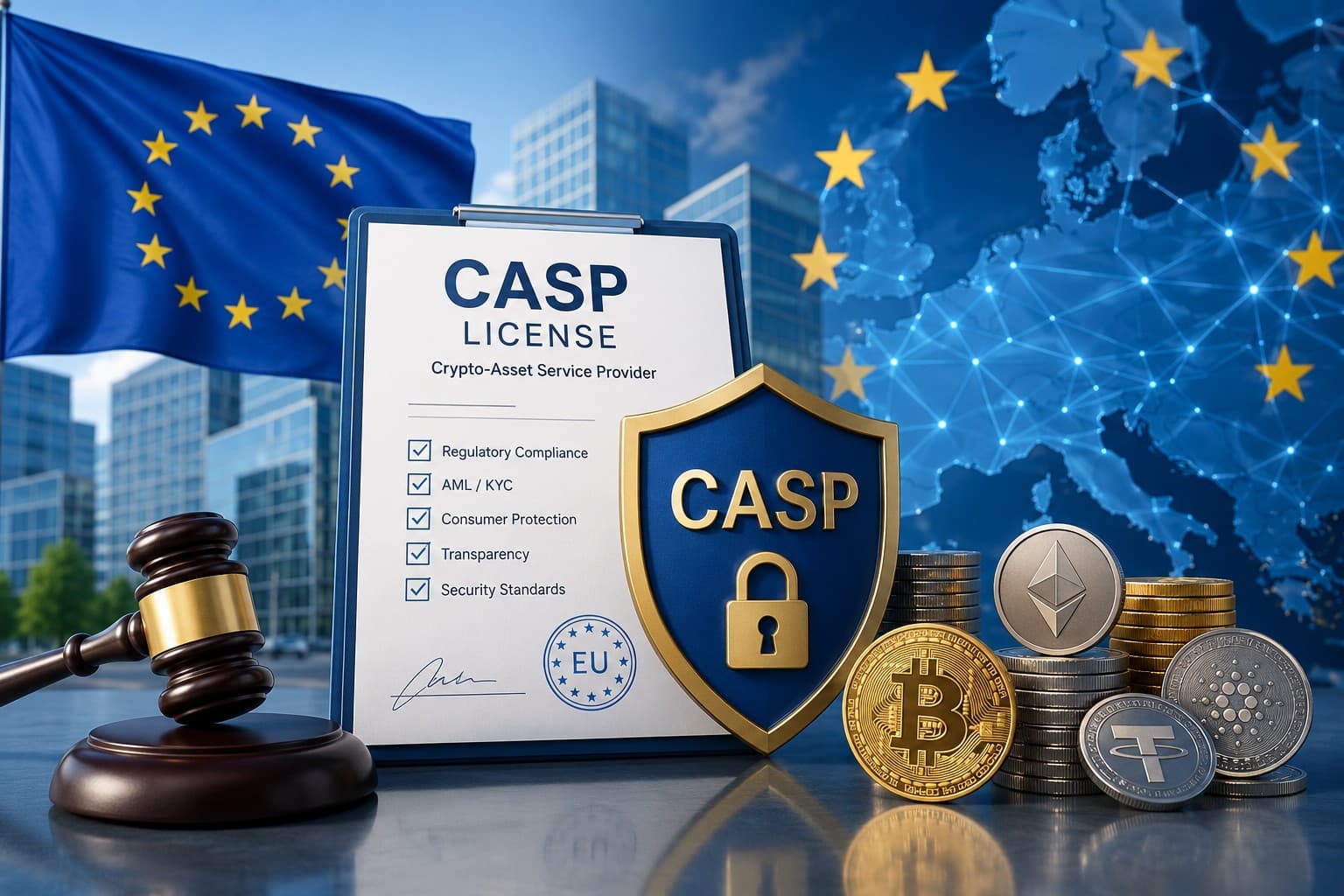
The European cryptocurrency industry is entering a new stage of development as the Crypto-Asset Service Provider (CASP) licensing framework continues to reshape the regulatory landscape. Following the implementation of the Markets in Crypto-Assets (MiCA) Regulation, obtaining a CASP license has become one of the most important objectives for digital asset businesses seeking long-term growth within the European market.
During the past year, regulators across the European Union have significantly intensified efforts to establish a transparent, secure, and harmonized environment for crypto service providers. The transition from fragmented national registration systems toward a unified licensing regime is creating new opportunities for legitimate businesses while raising compliance standards throughout the industry.
Market experts believe that CASP licensing will become the benchmark for operating a trustworthy cryptocurrency business in Europe. Companies that successfully complete the authorization process are expected to benefit from stronger market credibility, improved access to banking services, greater institutional interest, and the ability to expand operations across multiple European jurisdictions.
Europe Continues Building a Unified Crypto Market
For many years, cryptocurrency businesses faced significant regulatory uncertainty within Europe. Different countries applied different licensing rules, compliance procedures, and supervisory requirements. Companies operating internationally often had to obtain multiple registrations or adapt their business models to satisfy varying national regulations.
The introduction of MiCA represents one of the most comprehensive regulatory reforms ever introduced to the global digital asset industry. Rather than maintaining separate national frameworks, European regulators are creating a standardized system that establishes consistent requirements for crypto businesses across participating countries.
The CASP license serves as the foundation of this new regulatory environment. Once authorized by the competent authority in an EU Member State, eligible companies may benefit from passporting rights, enabling them to provide regulated services throughout the European Economic Area without seeking entirely new licenses in every jurisdiction.
This harmonized approach is expected to reduce regulatory fragmentation while encouraging innovation, investment, and responsible competition.
Demand for CASP Licenses Continues to Increase
Industry observers report growing demand for CASP licensing among both established cryptocurrency companies and new market entrants.
Large exchanges, digital wallet providers, brokerage platforms, custody providers, token issuers, and fintech companies are actively preparing for the new regulatory environment. Many businesses recognize that obtaining a CASP license is no longer simply a legal requirement but also an important commercial advantage.
Institutional investors increasingly prefer working with regulated counterparties. Banking institutions are also placing greater emphasis on regulatory status before establishing partnerships with crypto businesses. Payment providers, investment firms, venture capital funds, and corporate clients are becoming more selective when choosing digital asset service providers.
As a result, companies with regulatory authorization are expected to enjoy greater market confidence and stronger business opportunities.
Compliance Standards Are Becoming More Sophisticated
The CASP licensing process extends well beyond submitting an application to regulators. Businesses must demonstrate that they have implemented comprehensive compliance systems capable of supporting sustainable operations.
Regulators expect applicants to establish robust Anti-Money Laundering (AML) procedures, Know Your Customer (KYC) controls, governance structures, operational risk management frameworks, cybersecurity measures, and internal audit processes.
Senior management must demonstrate appropriate experience, integrity, and competence. Shareholder transparency has also become an important consideration during the authorization process.
In addition, companies must develop detailed internal policies covering client asset protection, outsourcing arrangements, conflict of interest management, incident reporting, and business continuity planning.
These requirements are intended to improve the overall stability of the digital asset ecosystem while reducing operational and financial risks.
Investor Protection Remains a Key Priority
Consumer protection has become one of the central objectives of Europe's evolving crypto regulatory framework.
The rapid growth of the cryptocurrency market over the past decade attracted millions of retail investors, but it also exposed weaknesses related to transparency, fraud prevention, cybersecurity, and governance.
The CASP framework introduces stricter obligations designed to strengthen trust between service providers and their customers.
Licensed companies are expected to maintain transparent communication with clients, clearly disclose risks associated with digital assets, implement secure custody arrangements, and establish effective complaint handling procedures.
Although regulation cannot eliminate market volatility, it creates a safer operating environment by ensuring that service providers follow clearly defined legal and operational standards.
Technology and Security Receive Greater Attention
Cybersecurity has emerged as one of the most significant priorities during the licensing process.
As digital asset businesses continue handling increasingly valuable customer funds and sensitive information, regulators expect companies to demonstrate strong technological resilience.
Businesses seeking CASP authorization are investing heavily in secure IT infrastructure, penetration testing, incident response planning, encryption technologies, access management systems, and continuous security monitoring.
Operational resilience has become equally important. Companies must show they can continue providing services even during technical failures, cyber incidents, or unexpected operational disruptions.
These requirements reflect the growing maturity of the European crypto sector, where technological excellence is becoming just as important as financial compliance.
Competition Is Shifting Toward Quality
The European crypto industry is witnessing a gradual shift in competitive priorities.
Several years ago, companies primarily competed by offering lower trading fees, aggressive marketing campaigns, or rapid product launches. Today, regulatory compliance, governance quality, and operational reliability are becoming equally valuable competitive advantages.
Institutional clients increasingly evaluate crypto service providers based on licensing status, corporate governance, cybersecurity controls, financial stability, and regulatory transparency.
This evolution is encouraging companies to invest more resources into long-term infrastructure rather than focusing solely on rapid expansion.
Industry analysts believe this trend will ultimately create a healthier and more sustainable digital asset ecosystem.
Cross-Border Expansion Becomes Easier
One of the most attractive features of CASP authorization is the possibility of expanding across Europe under a harmonized regulatory framework.
Instead of navigating numerous national licensing systems, authorized businesses can develop regional growth strategies that cover multiple European markets.
This creates significant opportunities for startups seeking international expansion while allowing established companies to optimize operational efficiency.
Cross-border cooperation is also expected to improve relationships between crypto companies, financial institutions, payment providers, and regulators.
The result is likely to be a more integrated European digital finance market capable of competing globally.
More Businesses Preparing for Authorization
Consulting firms and legal advisors report increasing interest from companies planning to obtain CASP licenses during 2026.
Many organizations are currently conducting internal compliance assessments, restructuring corporate governance, strengthening AML programs, and upgrading cybersecurity systems before submitting formal applications.
Others are reviewing their existing business models to ensure they fully comply with MiCA requirements.
Although preparing for authorization requires considerable time and investment, many businesses consider the process essential for future competitiveness.
Companies that begin preparations early are generally better positioned to complete regulatory reviews efficiently and launch compliant services without unnecessary delays.
The Future of Europe's Crypto Industry
The European cryptocurrency market is entering an era where regulation and innovation are expected to develop together rather than compete against one another.
CASP licensing is gradually becoming the standard for responsible participation in the digital asset industry. Businesses that embrace regulatory compliance, invest in governance, strengthen operational resilience, and prioritize customer protection are likely to build stronger reputations and achieve more sustainable growth.
As the licensing framework continues to mature, Europe has the opportunity to become one of the world's leading jurisdictions for regulated crypto innovation. Clear rules, consistent supervision, and high compliance standards are expected to attract new investment, encourage responsible technological development, and support long-term market stability.
For cryptocurrency companies, obtaining a CASP license is no longer simply about meeting legal obligations. It represents a strategic investment in credibility, international expansion, and long-term success within one of the world's most important digital asset markets.
About Fintech Harbor
Fintech Harbor is an international consulting company specializing in cryptocurrency licensing, fintech regulation, compliance solutions, and corporate structuring. The company assists clients throughout every stage of the CASP licensing process, including jurisdiction selection, legal analysis, regulatory documentation, AML and compliance framework development, communication with supervisory authorities, and post-licensing support. With extensive experience in more than 20 jurisdictions, Fintech Harbor helps crypto businesses establish compliant operations and successfully expand into European and global financial markets.