

How Bitcoin Supply Works: Halving, Mining Rewards, and the 21M Cap
Data as of 24 April 2026. Figures are the market snapshot at publication; see the Bitcoin price page for live numbers.

Intro summary
Bitcoin’s supply model is one of the clearest reasons it stands apart from traditional currencies and many other digital assets. New bitcoin are issued through mining, the block reward is reduced through halving events, and the total supply is capped at 21 million. This guide explains how Bitcoin issuance works, why halving matters, and how supply affects scarcity, miner incentives, and long-term market structure.
Key takeaways
Bitcoin has a fixed maximum supply of 21 million
New bitcoin enter circulation through mining
The block reward is cut in half at regular intervals
Halving reduces the pace of new issuance, not the total supply cap
Lower issuance does not automatically guarantee higher prices
Bitcoin’s supply model matters because it shapes scarcity, miner economics, and long-term monetary expectations
What is Bitcoin supply?
Bitcoin supply refers to the total amount of bitcoin that exists or can exist under the protocol’s rules. It includes the bitcoin already in circulation, the bitcoin that will still be mined in the future, and the hard cap that limits total supply to 21 million.
This is one of the main reasons Bitcoin is often described as a scarce digital asset. The system does not create new coins on demand. Instead, it follows a fixed issuance schedule that is visible in advance. That makes Bitcoin different from fiat currencies and also different from many digital assets with more flexible monetary systems.
Why is Bitcoin capped at 21 million?
Bitcoin is capped at 21 million because its monetary policy is built around scarcity and predictability. The cap is written into the protocol and defines the maximum number of bitcoins that can ever be issued.
This matters because the cap gives Bitcoin a fixed long-term supply ceiling. Users do not need to guess how many new units might be created in response to political or economic decisions. That does not mean the Bitcoin price is fixed or stable. It means the supply side is more transparent and constrained than in most monetary systems.
How are new bitcoins created?
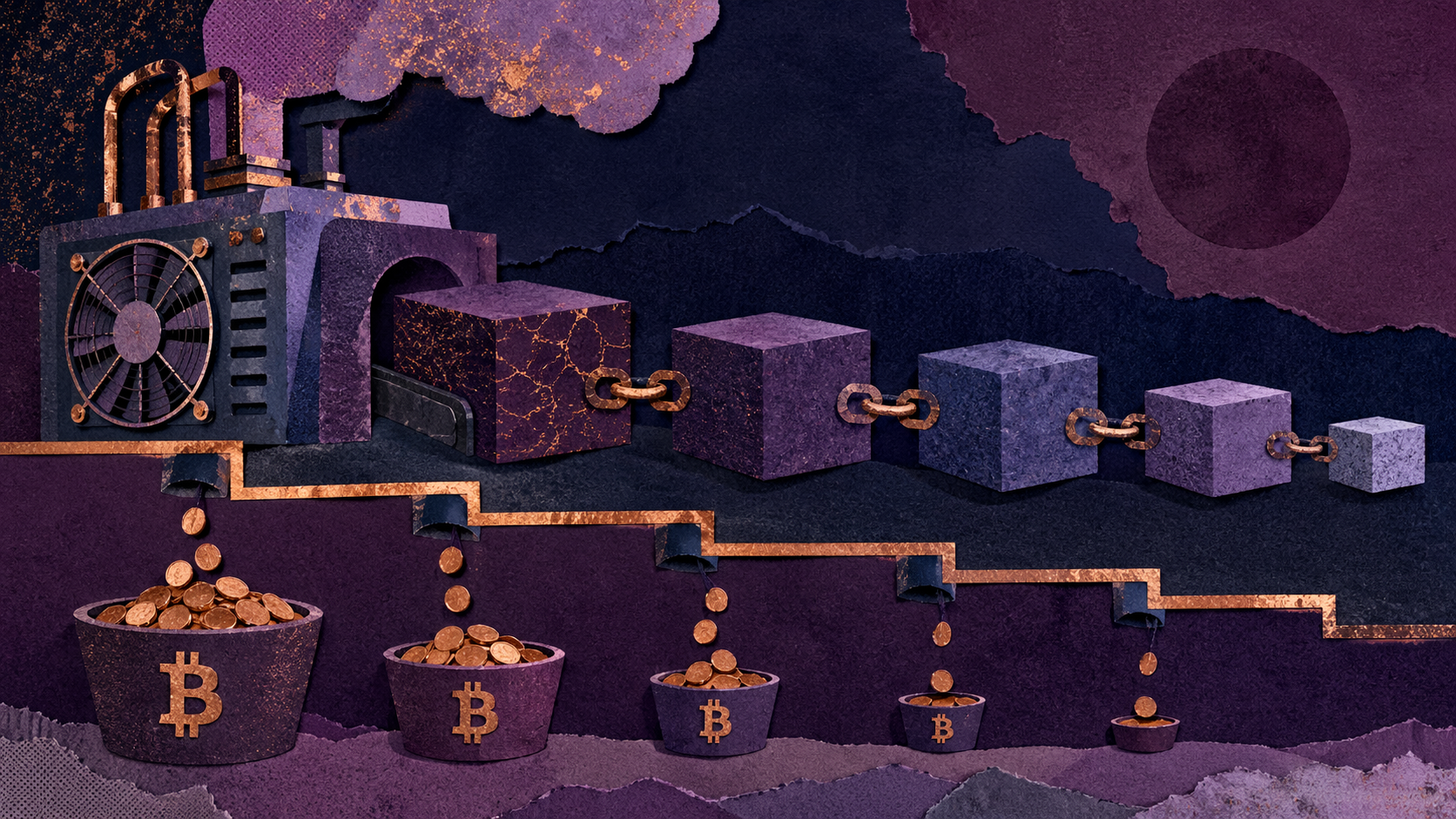
New bitcoins are created through mining. When miners add valid blocks to the blockchain, they can receive a block reward made up of newly issued bitcoin and transaction fees. This process is how new coins enter circulation.
Mining is not only a distribution mechanism. It is also part of Bitcoin’s security model. Miners help confirm transactions and maintain the blockchain, and the block reward gives them a financial incentive to do so. Over time, the newly issued portion of that reward becomes smaller, which is where halving becomes important.
What is the Bitcoin block reward?
The Bitcoin block reward is the amount miners earn for successfully adding a new block to the chain. It includes two parts:
newly issued bitcoin
transaction fees paid by users
For many readers, the important point is that the block reward is how Bitcoin supply enters the market. When the reward is reduced, the rate of new issuance also falls. That is why the block reward matters not only to miners, but also to investors, analysts, and anyone trying to understand Bitcoin’s supply dynamics.
What is Bitcoin halving?
Bitcoin halving is the event that cuts the block reward by 50%. In simple terms, miners receive half as much newly issued bitcoin per block as they did before. This happens on a recurring schedule built into the protocol.
Halving is one of the main mechanisms that makes Bitcoin’s issuance decline over time. It is not a vote, a policy response, or a discretionary change. It is part of how Bitcoin was designed from the beginning. That is also why halving gets so much attention: it directly changes the rate at which new supply enters circulation.
How often does Bitcoin halving happen?
Bitcoin halving happens approximately every four years. The exact timing depends on block production rather than a fixed date on the calendar, but the general rhythm is well known.
For beginners, the useful takeaway is that Bitcoin supply does not slow down gradually every day. It slows down in major steps. Each halving reduces the pace of new issuance and moves Bitcoin closer to its maximum supply. That step-by-step design is part of what makes Bitcoin’s monetary schedule easy to model and easy to explain.
How does halving affect Bitcoin issuance?
Halving affects Bitcoin issuance by reducing the number of new bitcoins created with each block. That means fewer new coins enter circulation after each halving than before.
This does not change the total cap. It changes the speed at which Bitcoin approaches that cap. That distinction is important. The 21 million limit defines the maximum supply. Halving defines the flow of new supply over time. In market terms, that means halving affects issuance pressure even though the long-term supply ceiling remains the same.
Why does halving matter for scarcity?
Halving matters for scarcity because it slows the flow of new supply into the market. If Bitcoin’s total cap explains long-term scarcity, halving explains how that scarcity becomes tighter over time.
This is one reason Bitcoin’s supply model is often discussed using both stock and flow concepts. The stock is the amount already in existence. The flow is the amount of new bitcoin entering the market through mining. Each halving reduces the flow, which can strengthen Bitcoin’s scarcity profile even though the total cap does not change.
Does halving automatically make Bitcoin more valuable?
No. Halving does not automatically make Bitcoin more valuable. It reduces the pace of new issuance, but price still depends on demand, liquidity, sentiment, market structure, and broader macro conditions.
This is where many simplified explanations go wrong. Halving is important because it affects the supply side of the equation. But price is set by buyers and sellers in a live market. If demand is weak, a lower issuance rate does not guarantee a price increase. The more accurate view is that halving changes Bitcoin’s monetary structure, and markets then respond based on many other factors as well.
What happened to Bitcoin supply after the latest halving?
After the latest halving, the block reward was reduced again, meaning fewer newly issued bitcoins began entering circulation with each new block. The broader significance of this change is straightforward: Bitcoin’s issuance rate is now lower than it was before the halving.
For long-term observers, that matters more than the event headline itself. The real point of halving is not just that it happens. It is that Bitcoin’s supply schedule becomes progressively tighter over time. That is why halving remains one of the most closely watched parts of Bitcoin’s monetary design.
Why do miners care about halving?
Miners care about halving because it directly affects revenue. If the block reward is cut in half, miners receive fewer newly issued bitcoins for the same basic activity of securing the network and confirming blocks.
This can put pressure on mining economics. If price, transaction fees, or efficiency do not offset the lower subsidy, some mining operations may become less profitable. That is why halving is not just a supply event for investors. It is also an operational event for the participants who help maintain the network.
What happens when all 21 million bitcoin have been mined?
When all 21 million bitcoin have been mined, no new bitcoins will be issued through block subsidies. At that point, miners are expected to rely more heavily on transaction fees rather than newly created supply.
This is a very long-term part of Bitcoin’s design, not a near-term event. Still, it matters conceptually because it shows how Bitcoin’s issuance system tapers off instead of continuing forever. In that sense, Bitcoin does not just have a cap. It also has a built-in path toward zero new issuance.
Is Bitcoin still scarce if coins are lost?
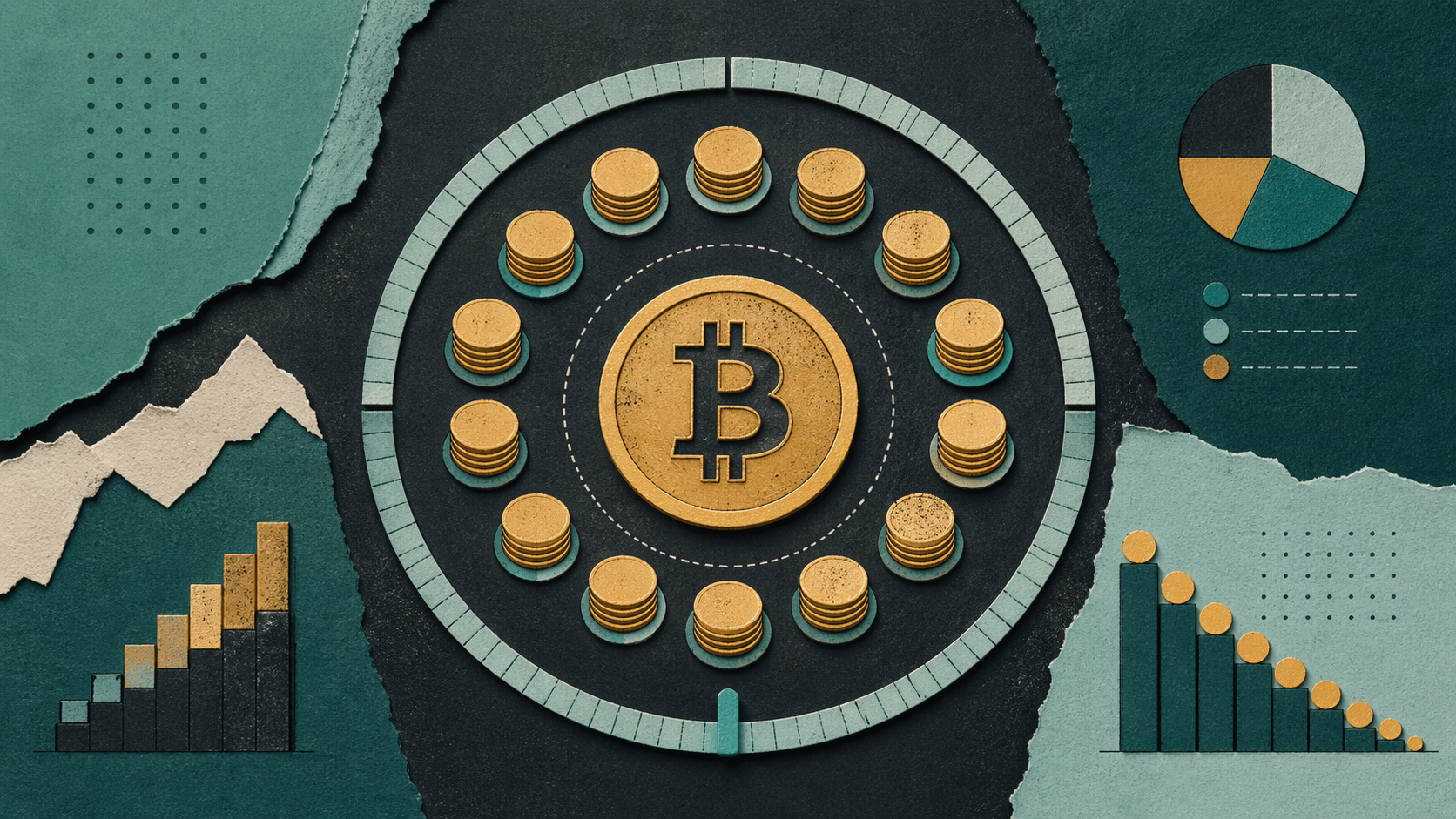
Yes. Bitcoin can still be considered scarce even if some coins are lost. In fact, lost coins may make effective available supply tighter than the headline cap suggests.
This is because there is a difference between protocol supply and practical market supply. The protocol cap remains 21 million whether coins are accessible or not. But if some coins are permanently lost due to forgotten keys or inaccessible wallets, the amount of bitcoin that can actually circulate may be lower in practice. That does not change Bitcoin’s official supply cap, but it can matter when people talk about available supply.
How should beginners think about Bitcoin halving and supply?
Beginners should think about halving and supply as a way to understand Bitcoin’s monetary rules, not as a shortcut for predicting price. The most important lesson is that Bitcoin supply is not random and not open-ended.
A simple beginner framework looks like this:
Bitcoin has a maximum supply
new coins are created through mining
the rate of new issuance falls over time
halving is the event that cuts issuance growth in major steps
Once those ideas are clear, many other Bitcoin concepts become easier to understand. Supply, scarcity, miner incentives, and even long-term narratives all become more logical when viewed through the issuance schedule.
What should advanced readers watch beyond the halving headline?
Advanced readers usually focus less on “when is the next halving?” and more on what halving changes in practice. That includes miner profitability, issuance flow, fee share, market liquidity, and how reduced new supply interacts with demand.
More useful advanced questions include:
How much new BTC is entering the market per day after halving?
How much of miner revenue now comes from fees?
How sensitive are mining operations to reward reductions?
How does shrinking issuance compare with broader market demand?
These questions move the discussion away from hype and toward structure. That is usually where better analysis begins.
What are the most common misconceptions about Bitcoin halving and supply?
One common misconception is that halving suddenly makes Bitcoin scarce. Bitcoin is already scarce by design. Halving does not create scarcity from nothing. It increases scarcity pressure by reducing the rate of new issuance.
Another misconception is that halving guarantees a bullish market outcome. It does not. Halving changes supply flow, but price still depends on demand and market conditions.
A third misconception is that supply is the only thing that matters. Supply is crucial, but Bitcoin’s market behavior is also shaped by liquidity, custody, regulation, sentiment, and macro conditions. Understanding supply is essential, but it is still only one part of the bigger picture.
Why does Bitcoin supply still matter in 2026?
Bitcoin supply still matters in 2026 because it remains one of the clearest reasons Bitcoin is treated differently from both fiat currencies and many other digital assets. Supply is not just a background detail. It shapes how people think about scarcity, value, issuance, long-term holding, and market structure.
For new readers, Bitcoin supply helps explain why Bitcoin is often described as digital scarcity. For experienced market participants, it remains one of the most important frameworks for interpreting halving events, miner incentives, and long-term asset behavior. In both cases, supply is not a side topic. It is one of the foundations of the Bitcoin story.
The bottom line
Bitcoin supply works through a fixed issuance schedule, mining-based distribution, recurring halving events, and a hard cap of 21 million coins. Together, those rules create a monetary system that is transparent, limited, and designed to become more restrictive over time.
For beginners, the main takeaway is simple: Bitcoin does not create new supply indefinitely, and halving is the mechanism that slows issuance over time. For advanced readers, the more important question is how shrinking issuance interacts with miner economics, market demand, and long-term network incentives. Both groups benefit from understanding the same core principle: Bitcoin scarcity is not just a narrative. It is built into the protocol itself.
FAQ
What is Bitcoin halving in simple terms?
Bitcoin halving is the event that cuts the mining block reward by 50%, reducing the rate at which new bitcoin enter circulation.
How many bitcoins will ever exist?
Bitcoin has a maximum supply cap of 21 million coins.
Why is Bitcoin supply considered predictable?
Because the protocol follows a fixed issuance schedule with known reward reductions over time.
Does halving guarantee a price increase?
No. Halving reduces new supply, but market price still depends on demand, liquidity, and broader market conditions.
Why does the block reward matter?
The block reward determines how new bitcoin are issued and how miners are compensated for helping secure the network.
Editorial disclaimer
This article is published for educational purposes only and does not constitute investment, financial, legal, or tax advice. Bitcoin and other digital assets involve risk, including volatility, custody risk, regulatory uncertainty, and possible loss of capital. Readers should verify important information independently and consult a qualified professional where appropriate.
Sources and methodology
This article is based on primary Bitcoin documentation, public educational resources, regulatory materials, and general market structure concepts related to supply, issuance, mining, scarcity, liquidity, and volatility. The goal is explanatory, not predictive.
Key reference sources:
https://bitcoin.org/bitcoin.pdf
https://bitcoin.org/en/faq
https://www.coinbase.com/learn/crypto-basics/what-is-a-bitcoin-halving